
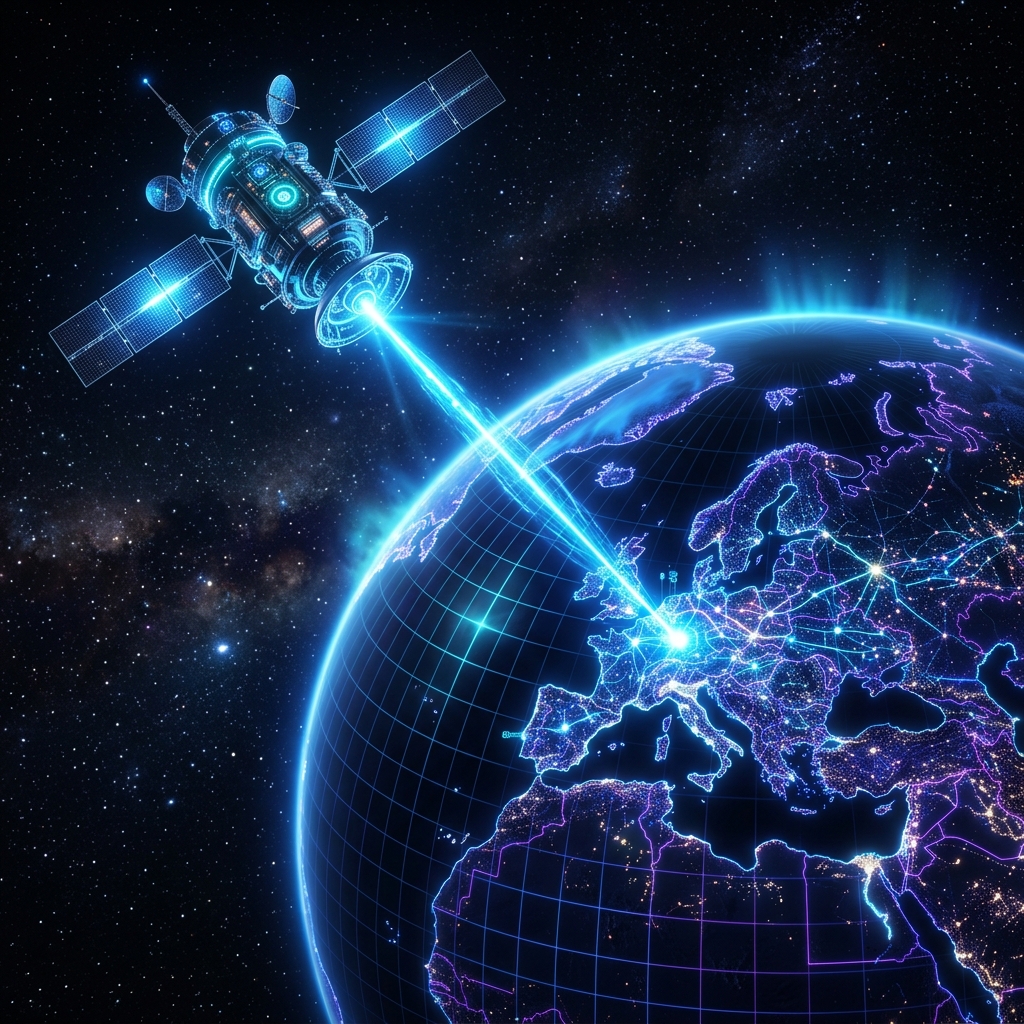
Today, we take it for granted that a small device in our pocket can pinpoint our exact location anywhere on Earth. But the Global Positioning System (GPS) was decades in the making, born from the tensions of the Cold War and the Space Race.
The Sputnik Inspiration
In 1957, the Soviet Union launched Sputnik, the first artificial satellite. American scientists tracking Sputnik noticed something interesting: because of the Doppler effect, the frequency of the satellite's radio signals changed as it moved closer and then further away. They realized that if they knew their exact location on Earth, they could map the satellite's orbit. More importantly, if they knew the satellite's exact orbit, they could figure out their exact location on Earth.
A Military Project
Throughout the 1960s and 1970s, the US Department of Defense developed the concept into a robust system originally called Navstar GPS. It was designed to help the military accurately target missiles, coordinate troop movements, and navigate ships and aircraft. The first operational GPS satellite was launched in 1978.
Civilian Access and "Selective Availability"
In 1983, a Korean Air Lines passenger jet was shot down after accidentally straying into Soviet airspace due to a navigation error. In response, President Ronald Reagan ordered that GPS be made available for civilian use to prevent future tragedies.
However, the military intentionally degraded the civilian signal in a program known as "Selective Availability," making civilian GPS inaccurate by about 100 meters. It wasn't until the year 2000 that President Bill Clinton ordered the military to turn off Selective Availability, instantly making civilian GPS 10 times more accurate.
The Modern Era
The removal of Selective Availability sparked a technological revolution. It enabled the creation of turn-by-turn car navigation systems, location-based smartphone apps, ride-sharing services like Uber, and the location tools we use today on websites like LocalAtual.
You can also try Onde Estou for GPS coordinates, location finder and satellite view tools.